The Psychology of the Waiting Room: Lost Your Diploma? Buy University of Saint Joseph Copy Online
In a bustling immigration law firm in Hartford, Connecticut, the waiting room is never just a room with chairs. Buy a University of Saint Joseph diploma, get a University of Saint Joseph degree online. It is a high-anxiety transitional space. Clients sitting in those molded plastic seats are often grappling with the most stressful moments of their lives: OPT timeline expirations, H-1B lottery anxieties, or complex EB-2 visa evaluations.
As the managing partner, I learned early on that the architecture of this room speaks volumes before a single legal document is ever reviewed. One of the most powerful, yet subconsciously processed, elements in this space is the “Degree Wall.”
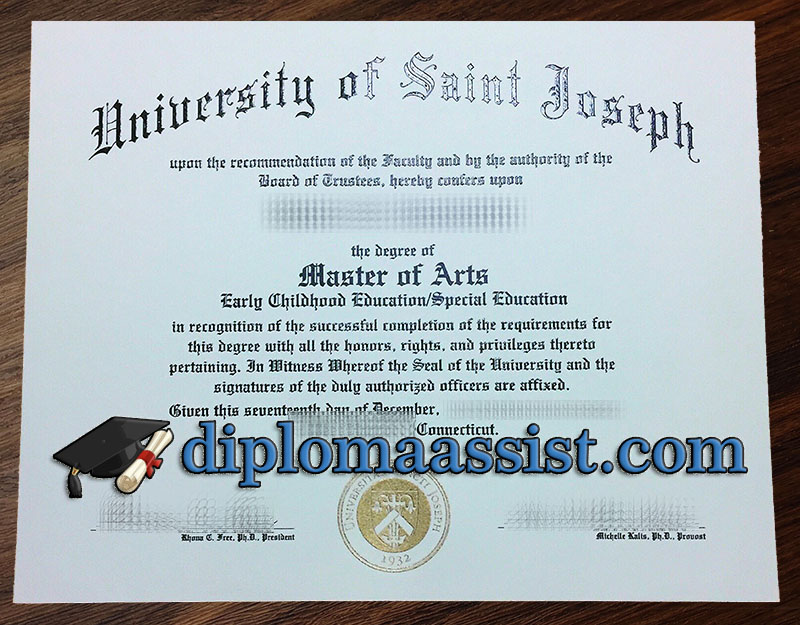
International students and foreign professionals are deeply fixated on the physicality of American academic credentials. To them, a degree isn’t just paper; it is a golden ticket. When my HVAC system leaked last winter, and water stained the original diploma I had hanging in the client-facing lobby, I didn’t just lose a piece of paper—I lost a vital psychological tool. When you realize the structural integrity of your client’s trust is compromised, the modern logistical solution is clear: if you’ve lost your diploma, buy a University of Saint Joseph copy online to restore the visual balance instantly.
The “Degree Trust” Phenomenon
Why does a framed degree matter so much in an immigration law office? It boils down to sympathetic magic and visual validation. When a client from South America or Southeast Asia is trying to prove the legitimacy of their foreign transcripts to USCIS, seeing a tangible, heavily embossed American diploma certificate on the wall provides immense subconscious comfort.
It signals: *“Look, this is what a legitimate U.S. credential looks like. This firm understands the weight of academic verification.”* A wall displaying various diplomas and certificates acts as a silent ambassador of institutional trust. It bridges the gap between their foreign academic experience and the rigid U.S. immigration bureaucracy.
The Crisis of the Missing Prop
When the water damage ruined my displayed degree, I was left with an ugly, blank rectangle on the wall. In a high-stakes environment, that blank space reads as incompetence or disorganization to an anxious eye.
My actual academic records and original degree are locked securely in a fireproof safe at home—I certainly don’t need to risk the genuine article in a public lobby. But the lobby needs *something* to maintain the aesthetic. The university registrar’s office, while helpful, operates on an academic timeline. Requesting an official replacement, getting it notarized, and shipping it would take months. I couldn’t afford a months-long gap in my office’s visual psychology.
Sourcing the Visual Proxy
This is the exact scenario where the pragmatic use of a college diploma maker comes into play. I wasn’t looking to deceive a university or an employer; I was procuring a high-fidelity architectural prop for my waiting room.
When you buy diploma online for this specific purpose, the standards must remain uncompromising. Anxious clients sitting three feet away will scrutinize the document. A cheap, pixelated printout would have the exact opposite effect, signaling fraud rather than trust. I needed a realistic diploma that captured the specific typography, the correct institutional seals, and the heavy cotton-linen paper weight characteristic of a University of Saint Joseph degree.
By choosing to order diploma online from a specialized replica studio, I bypassed the university bureaucracy entirely. I submitted the specifications, and within days, a physically accurate stand-in was delivered to my door.
The Unspoken Ethical Boundary
It is crucial to articulate the ethical framework of this practice in the legal sector. A replica hanging in a waiting room is a piece of interior design psychology. It is an aesthetic choice meant to soothe and reassure.
It is never, under any circumstances, used to verify education. When my paralegals prepare credential evaluation reports for USCIS, they rely on digital transcripts verified through WES or the National Student Clearinghouse. No immigration officer, no university admissions board, and no background check company has ever been asked to look at the framed document on my lobby wall. The law operates on digital truth; the lobby operates on visual comfort.
Maintaining the Illusion of Stability
In immigration law, perception is half the battle. Clients need to believe that their attorney operates from a position of unshakeable stability and institutional understanding. The decor of the waiting room is the first brief in that argument.
If a disaster strips your office of its visual anchors, you don’t need to halt your practice while a registrar prints a new piece of paper. You acknowledge the loss, secure the actual records, and deploy a strategic visual replacement. For law firms, private practices, and consultancies that rely on the subconscious power of academic display, knowing when to simply buy University of Saint Joseph copy online is a masterclass in environmental psychology and seamless business continuity.