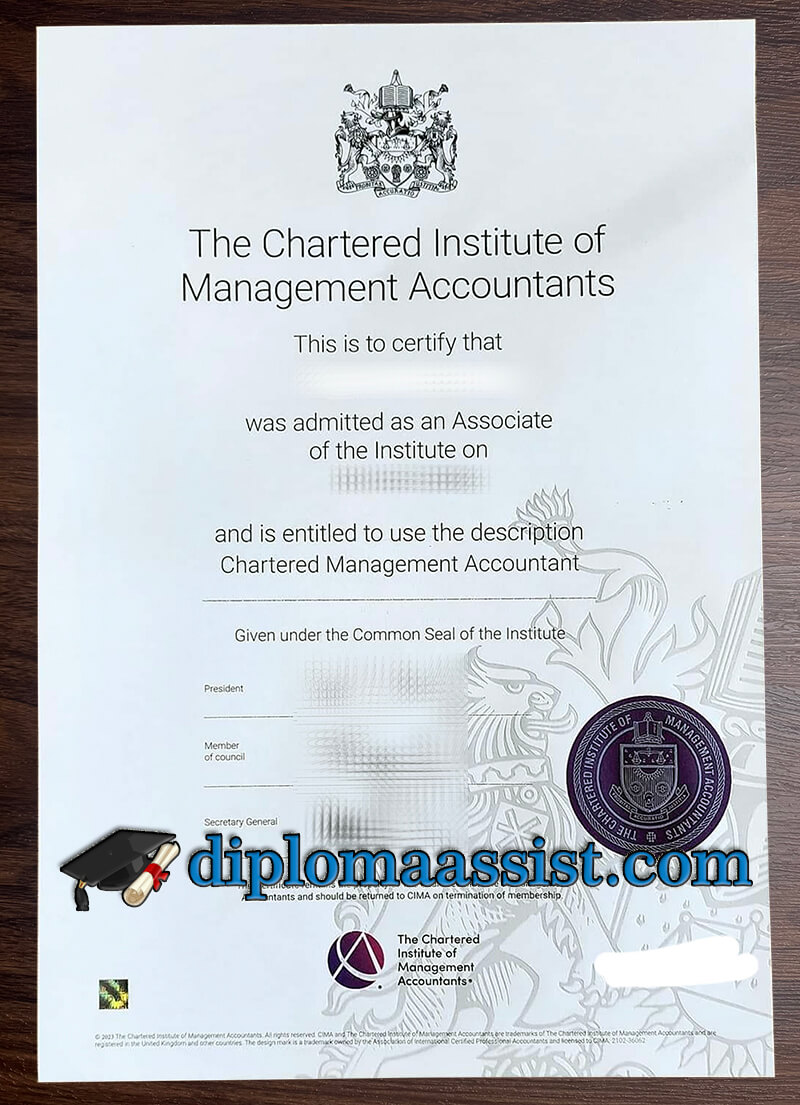
CIMA Qualification: The Ultimate Guide to Advancing Your Career in Business and Finance
In the modern corporate landscape, traditional accounting is no longer just about balancing books and tax compliance. Modern organizations require financial professionals who can analyze data, predict trends, and drive strategic business decisions. Order a CIMA certificate. Where can I get a CIMA certificate replica?
This is where the Chartered Institute of Management Accountants (CIMA) comes into play. As the world’s largest professional body of management accountants, CIMA offers a globally recognized qualification that bridges the gap between financial expertise and strategic business leadership.
What is CIMA?
Founded in 1919, CIMA focuses on management accounting, which involves analyzing financial information to inform internal business strategy. Unlike financial accounting (which reports on past performance to external stakeholders), management accounting looks forward, helping businesses plan for future growth, manage risk, and optimize operations.
Through its partnership with the American Institute of CPAs (AICPA), CIMA offers successful graduates the Chartered Global Management Accountant (CGMA) designation—a highly coveted title that signals elite business acumen to employers worldwide.
The CIMA Qualification Framework
The CIMA professional qualification is structured into three distinct pillars and three progressive levels, culminating in a comprehensive test of professional competence.
The Three Core Pillars
-
Enterprise Pillar: Focuses on how to formulate and effectively implement corporate strategy.
-
Performance Pillar: Looks at cost accounting, budgeting, and financial management tools to evaluate business success.
-
Financial Pillar: Covers financial reporting, regulatory frameworks, and corporate taxation.
The Structural Levels
To earn your CGMA designation, you must progress through three core levels, each consisting of three Objective Test exams and one comprehensive Case Study exam.