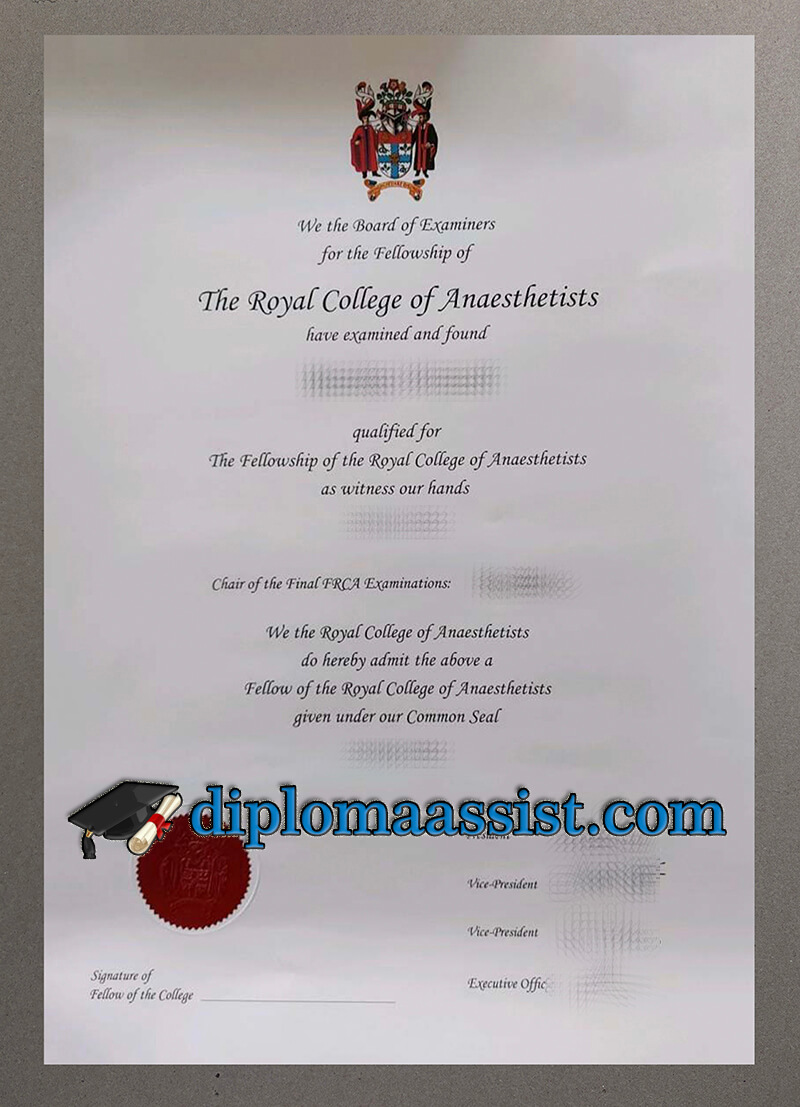
Why the Royal College of Anaesthetists Is Important in Modern Medicine
The Royal College of Anaesthetists is one of the leading professional medical organizations dedicated to anaesthesia, perioperative medicine, critical care, and pain management. Order Royal College of Anaesthetists certificate. Based in the United Kingdom, the college plays a major role in setting professional standards, supporting medical education, and advancing patient safety in anaesthetic practice.
For doctors pursuing careers in anaesthesiology, the Royal College of Anaesthetists is widely recognized for its high training standards, respected qualifications, and contribution to healthcare excellence.
What Is the Royal College of Anaesthetists?
The Royal College of Anaesthetists, often abbreviated as RCoA, is the professional body responsible for the specialty of anaesthesia in the UK.
The organization supports:
- Anaesthetists
- Intensive care professionals
- Pain medicine specialists
- Medical trainees
- Researchers and educators
The college helps develop clinical guidelines, training frameworks, examinations, and research initiatives that improve patient care and medical standards. Get an Royal College of Anaesthetists certificate online.
Role of Anaesthetists in Healthcare
Anaesthetists play a critical role in modern medicine. Professionals trained under the standards of the Royal College of Anaesthetists are responsible for:
- Administering anaesthesia during surgery
- Monitoring patients during operations
- Managing pain relief
- Providing intensive care support
- Handling emergency medical situations
- Supporting perioperative medicine
Their expertise helps ensure patient safety before, during, and after surgical procedures.
FRCA Qualification
One of the most recognized qualifications associated with the Royal College of Anaesthetists is the FRCA examination.
FRCA stands for Fellowship of the Royal College of Anaesthetists.
The qualification is designed for doctors training in anaesthesia and includes:
Primary FRCA
This stage focuses on:
- Basic sciences
- Physiology
- Pharmacology
- Anatomy
- Clinical measurement
Final FRCA
The final stage evaluates:
- Advanced anaesthetic knowledge
- Clinical judgement
- Practical skills
- Communication abilities
- Patient safety management
The FRCA qualification is highly respected internationally and is considered a major milestone in anaesthetic training.
Education and Training
The Royal College of Anaesthetists provides educational resources, training programs, and professional development opportunities for doctors throughout their careers.
Training areas include:
- General anaesthesia
- Critical care medicine
- Pain management
- Obstetric anaesthesia
- Paediatric anaesthesia
- Cardiothoracic anaesthesia
- Neuroanaesthesia
The college also supports continuing professional development to ensure healthcare professionals maintain high clinical standards.
International Recognition
The qualifications and standards established by the Royal College of Anaesthetists are recognized in many countries worldwide.
Doctors with FRCA qualifications often work in:
- United Kingdom hospitals
- Middle Eastern healthcare systems
- Asian medical institutions
- International private hospitals
- Academic medical centers
This global recognition makes RCoA qualifications valuable for doctors seeking international medical careers.
Research and Patient Safety
The Royal College of Anaesthetists actively supports research and innovation in anaesthesia and perioperative medicine.
Major focus areas include:
- Improving surgical safety
- Reducing medical complications
- Enhancing pain management
- Advancing intensive care practices
- Developing safer anaesthetic techniques
The organization also works closely with healthcare systems to improve patient outcomes and healthcare quality.
Career Opportunities in Anaesthesia
Doctors trained under the guidance of the Royal College of Anaesthetists may pursue careers in:
- Consultant Anaesthesia
- Intensive Care Medicine
- Pain Medicine
- Academic Medicine
- Emergency Medicine
- Medical Education
- Hospital Leadership
Anaesthetists are highly valued in healthcare systems worldwide due to their specialized clinical expertise.
Why Doctors Choose RCoA Qualifications
Medical professionals pursue qualifications from the Royal College of Anaesthetists because of:
- Internationally respected certification
- Strong professional reputation
- Advanced clinical training
- Career advancement opportunities
- Access to global medical networks
- Contribution to patient safety and healthcare excellence
These benefits make RCoA qualifications highly competitive and professionally rewarding.
Challenges of Anaesthesia Training
Training in anaesthesia can be demanding. Candidates preparing for examinations under the Royal College of Anaesthetists often face:
- Intensive clinical responsibilities
- Advanced scientific study
- Long training periods
- High examination standards
- Pressure in emergency situations
However, successful completion of training provides strong professional recognition and career stability.