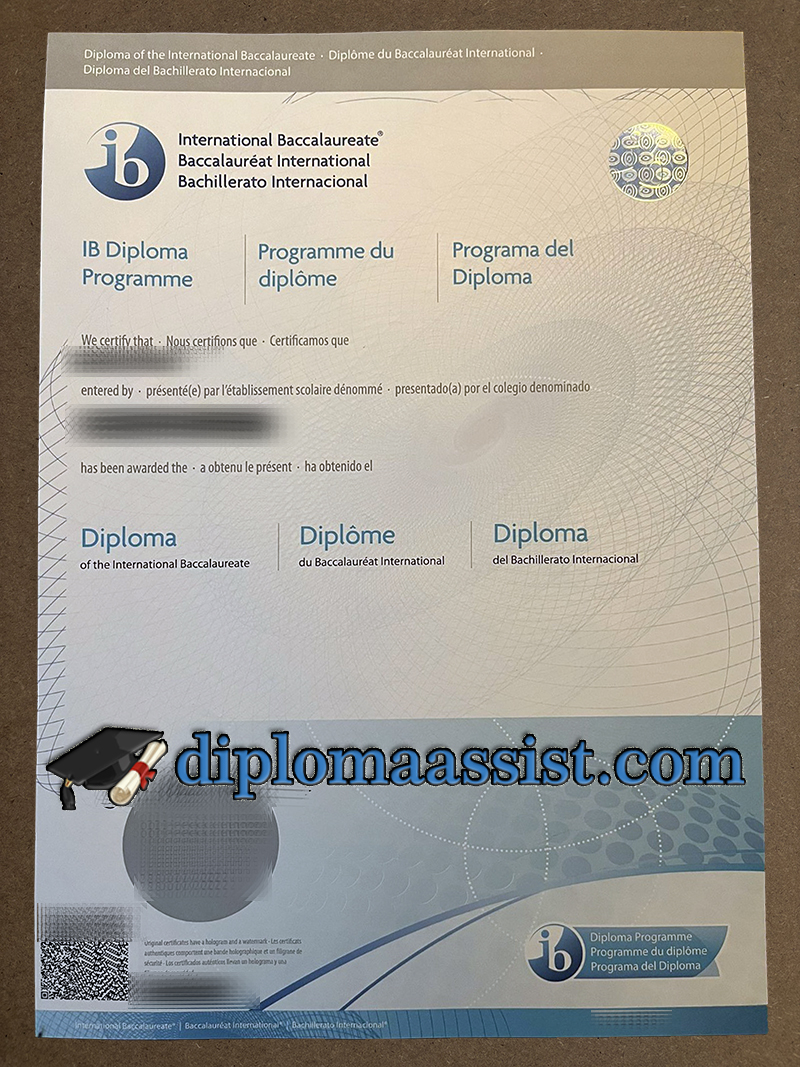
Order International Baccalaureate Diploma: Complete Guide to the IB Program and Credentials
The International Baccalaureate (IB) Diploma is one of the most prestigious and globally recognized pre-university qualifications in the world. For students, parents, and professionals seeking to understand this esteemed credential—or explore options for obtaining official documentation—this comprehensive guide covers everything you need to know about the IB Diploma program, its structure, recognition, and the legitimate processes for obtaining official transcripts and certificates. Get the IB diploma and transcript online.
What is the International Baccalaureate Diploma?
The International Baccalaureate Diploma Programme (IBDP) is a two-year educational program primarily designed for students aged 16 to 19. Founded in 1968 in Geneva, Switzerland, the IB organization has grown into a global educational foundation offering four programs to over 5,000 schools across more than 150 countries. How much does it cost to order an International Baccalaureate Diploma?
The IB Diploma is widely regarded as one of the most challenging and respected high school qualifications, preparing students for success at top universities worldwide. Its reputation rests on academic rigor, international-mindedness, and the development of critical thinking skills.
Key Facts About the IB Diploma
-
Administered by: International Baccalaureate Organization (IBO)
-
Founded: 1968
-
Duration: 2 years (typically grades 11 and 12)
-
Global Reach: Over 5,000 schools in 150+ countries
-
Assessment: External examinations and internal assessments
-
Maximum Score: 45 points
-
Passing Score: 24 points (minimum for diploma award)
The IB Diploma Curriculum: Structure and Requirements
Understanding the IB Diploma’s structure is essential for anyone considering the program or needing to verify credentials. The curriculum is designed to be comprehensive and balanced, preventing overspecialization. Make International Baccalaureate diploma
The Hexagon: Six Subject Groups
IB Diploma students must select one subject from each of six subject groups, ensuring breadth of knowledge:
Group 1: Studies in Language and Literature
-
Language A: Literature
-
Language A: Language and Literature
-
Literature and Performance (interdisciplinary)
Group 2: Language Acquisition
-
Language B (for learners with previous experience)
-
Language ab initio (for beginners)
-
Classical Languages (Latin, Classical Greek)
Group 3: Individuals and Societies
-
Business Management
-
Economics
-
Geography
-
History
-
Philosophy
-
Psychology
-
Social and Cultural Anthropology
-
Global Politics
-
Environmental Systems and Societies (interdisciplinary)
Group 4: Sciences
-
Biology
-
Chemistry
-
Physics
-
Computer Science
-
Design Technology
-
Sports, Exercise, and Health Science
-
Environmental Systems and Societies (interdisciplinary)
Group 5: Mathematics
-
Mathematics: Analysis and Approaches (higher level)
-
Mathematics: Applications and Interpretation (standard level)
Group 6: The Arts
-
Visual Arts
-
Theatre
-
Music
-
Dance
-
Film
-
Or another subject from Groups 1-5
The Core: Three Essential Components
Beyond the six subjects, all IB Diploma candidates must complete three core requirements:
1. Theory of Knowledge (TOK)
This interdisciplinary course explores the nature of knowledge across disciplines. Students reflect on questions like “What counts as knowledge?” and “How do we know what we claim to know?” Assessment includes a 1,600-word essay and an exhibition or presentation.
2. The Extended Essay (EE)
Students conduct independent research on a topic of their choice, producing a 4,000-word academic paper. This requirement develops university-level research and writing skills, with students working under the supervision of a school-based advisor.
3. Creativity, Activity, Service (CAS)
Students complete projects in three categories:
-
Creativity: Arts, creative thinking, and design
-
Activity: Physical exertion, sports, and a healthy lifestyle
-
Service: Unpaid, voluntary community engagement
CAS requires students to demonstrate seven learning outcomes over 18 months, fostering personal and interpersonal development.
Assessment and Scoring
IB Diploma assessment combines external examinations (taken at the end of the two-year program) with internal assessments graded by teachers and moderated externally.
Scoring Breakdown:
-
Each subject is graded on a scale of 1 to 7
-
TOK and EE contribute up to 3 additional points (via the matrix system)
-
Maximum total: 45 points (42 from subjects + 3 from core)
-
Minimum for diploma: 24 points with no failing conditions
Why the IB Diploma Matters: Recognition and Benefits
The IB Diploma’s value extends far beyond high school graduation. Universities and employers worldwide recognize IB graduates as exceptionally well-prepared.
University Recognition
Global Acceptance:
The IB Diploma is accepted by universities in over 100 countries, including:
-
United States: All Ivy League universities and top liberal arts colleges
-
United Kingdom: All Russell Group universities, including Oxford, Cambridge, and LSE
-
Canada: University of Toronto, McGill, UBC, and all major institutions
-
Australia: Group of Eight universities, including Sydney and Melbourne
-
Germany: Recognized as a higher education entrance qualification (subject to subject requirements)
-
Singapore, Hong Kong, Japan: All major universities
Advanced Standing:
Many universities offer:
-
Course credits for higher-level IB subjects (scores of 5-7)
-
Sophomore standing for exceptional IB scores
-
Scholarships specifically for IB Diploma graduates
Benefits for Students
Research consistently shows IB students:
-
Develop stronger critical thinking and research skills
-
Adapt more easily to university academic demands
-
Demonstrate greater time management and self-discipline
-
Exhibit international-mindedness and cultural awareness
-
Show commitment to community service and extracurricular engagement
Legitimate Ways to Obtain IB Diploma Documentation
For IB graduates, former students, or institutions needing verification, there are official channels for obtaining IB documents. This section covers legitimate processes only. Where to get an International Baccalaureate diploma? buy IB diploma and transcript online
Requesting Official Transcripts
If you have completed the IB Diploma and need official transcripts sent to universities or employers:
Through the IB’s Official Service:
-
Visit the International Baccalaureate’s official website
-
Navigate to the “Services for Alumni” section
-
Create an account or log in
-
Request transcripts to be sent directly to institutions
-
Pay applicable fees (varies by request type)
Through Your IB School:
Many IB schools maintain alumni services and can assist with:
-
Confirming graduation and scores
-
Providing certified copies of certificates
-
Assisting with transcript requests
Obtaining Replacement Certificates
If your original IB Diploma certificate is lost, damaged, or destroyed:
-
Contact the IB’s Assessment Division directly
-
Provide proof of identity and completion
-
Request a replacement certificate (fees apply)
-
Receive official replacement with updated issuance date
Verification for Employers and Institutions
Third parties can verify IB credentials through:
-
IB’s Secure Verification Service: Authorized institutions can verify candidate results
-
Direct Contact: Reaching out to the IB’s verification office
-
School Confirmation: Contacting the issuing IB World School
Important Considerations: Understanding the Risks
This section addresses the realities of diploma documentation while emphasizing legal and ethical considerations. get IB diploma online.
Why Legitimate Documentation Matters
Obtaining IB credentials through official channels is essential because:
-
Verification Systems: Universities and employers routinely verify credentials directly with the IB
-
Legal Consequences: Fraudulent credentials can result in expulsion, termination, and legal action
-
Professional Reputation: Academic integrity is fundamental to professional standing
-
Immigration Issues: Many countries verify educational credentials for visas and residency
Common Misconceptions
“No One Verifies Diplomas”:
Most universities, many employers, and all government agencies verify educational credentials. The IB maintains comprehensive records and verification systems.
“I Just Need Something That Looks Real”:
Modern verification goes beyond visual inspection. Institutions check with issuing bodies directly.
“It’s Just for a Job Application”:
Misrepresenting credentials is grounds for immediate termination, even years after hiring.
The IB Diploma vs. Other Qualifications
Understanding how the IB compares to other qualifications helps contextualize its value.
IB vs. A-Levels (United Kingdom)
| Aspect | IB Diploma | A-Levels |
|---|---|---|
| Breadth | 6 subjects + core | Typically 3-4 subjects |
| Specialization | Broad, balanced | Deep specialization |
| Core Requirements | TOK, EE, CAS | None |
| Assessment | Mix of exams and coursework | Primarily exams |
| International Focus | Strong | Varies by school |
IB vs. Advanced Placement (United States)
| Aspect | IB Diploma | AP Courses |
|---|---|---|
| Structure | Coherent program | Individual courses |
| Duration | 2-year program | Year-long courses |
| Philosophy | Holistic education | Subject mastery |
| International Recognition | Global | Primarily US-focused |
| Diploma Requirement | Complete program | No diploma requirement |
IB vs. German Abitur
| Aspect | IB Diploma | German Abitur |
|---|---|---|
| Focus | International | German-centric |
| Languages | Strong emphasis | German + foreign languages |
| Science Requirements | At least one science | Varies by state |
| Math Requirement | Required | Required |
| Recognition in Germany | Equivalent with conditions | Automatic |
Preparing for the IB Diploma: Tips for Success
For students considering or beginning the IB Diploma:
Subject Selection Strategy
-
Choose subjects aligned with university/career goals
-
Balance challenge with personal interest
-
Consider higher level subjects in areas of strength
-
Research university requirements for specific courses
Time Management
-
Develop consistent study routines from the beginning
-
Use planning tools for extended essay and CAS projects
-
Start internal assessments early
-
Balance academic work with CAS and personal time
Resource Utilization
-
Use IB published resources and subject guides
-
Form study groups with classmates
-
Seek teacher feedback on draft work
-
Practice with past examination papers