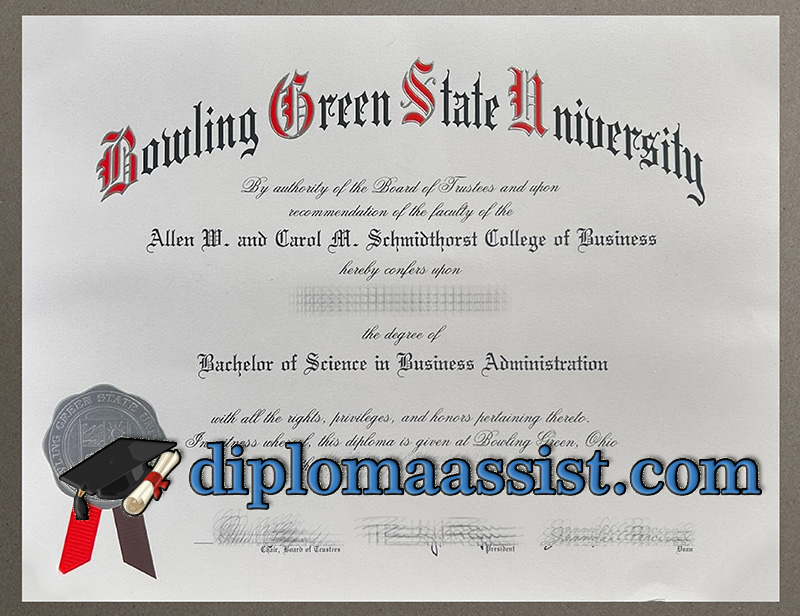
The Procurement Protocol: Secure Payment for a Bowling Green State University Diploma in Corporate Spaces
When we think of purchasing a replacement diploma, the default mental image is usually an individual sitting at a home computer, nervously typing in a personal credit card number. But this ignores a massive segment of the replica market: Institutional Procurement. Obtain a BGSU degree online.
Every year, corporate HR departments, executive search firms, university alumni associations, and historical societies purchase replica degrees. Perhaps a Fortune 500 company is designing a new executive boardroom and needs to display the academic credentials of their C-suite leadership. Maybe the BGSU Alumni Association is curating a physical exhibit celebrating the university’s rich history in Northwest Ohio, and they need era-accurate replicas of famous Falcons’ degrees to avoid risking the originals. order Bowling Green State University diploma, buy Bowling Green State University degree online, get a Bowling Green State University certificate.
In these scenarios, the person clicking “Checkout” is not spending their own money. They are spending corporate or non-profit funds, governed by strict internal controls, Procurement Card (P-Card) rules, and the looming threat of external financial audits. In this environment, secure payment for a Bowling Green State University diploma has nothing to do with personal privacy, and everything to do with institutional liability and fiduciary duty.
The Risk of “Fly-by-Night” Vendors in B2B Purchasing
Corporate procurement officers are trained to mitigate risk. When an employee uses a company P-Card to buy office supplies from Staples or a software subscription from Adobe, the financial plumbing is safe, insured, and standardized.
The replica diploma industry, however, is notoriously fragmented. Many vendors operate as transient, offshore entities with unencrypted checkout pages. If a procurement specialist inputs a corporate credit card into an unsecured portal, they are exposing their organization to catastrophic risk. If that vendor’s database is breached, the company could face massive financial liabilities, not to mention the logistical nightmare of canceling and re-issuing corporate credit cards across an entire department.
Furthermore, there is the risk of straight-up commercial fraud: the organization pays $500 for a batch of high-quality BGSU replicas, and a cheap, illegible envelope arrives a month later, with no recourse for a refund.
Defining “Secure Payment” for the Corporate Buyer
For the institutional buyer, secure payment is a multi-layered compliance checklist. Before a vendor is approved for a BGSU diploma order, the procurement team must verify the following financial protocols:
1. Rigorous PCI-DSS Compliance: The vendor must explicitly state their Payment Card Industry Data Security Standard (PCI-DSS) level. Secure payment means the vendor does not store the corporate credit card data on their own servers. The transaction must be tokenized and processed through a Tier-1, recognized payment gateway (like Stripe, Adyen, or PayPal Business).
2. 3D Secure Authentication (3DS): For corporate cards, secure payment requires 3DS 2.0 protocols. This means the checkout process must trigger a verification step directly with the company’s bank (often requiring an internal IT approval or a one-time password sent to the procurement officer’s corporate phone). This neutralizes unauthorized use of the P-Card.
3. Clean Audit Trails and Invoicing: This is where many replica vendors fail corporate buyers. A secure transaction must generate a clean, professional, GAAP-compliant invoice. If an internal auditor asks, “Why did we spend $800 on December 4th?”, the procurement officer cannot hand over a receipt that says “Fake Degree Guy.” The vendor must provide a formal invoice with neutral, descriptive language (e.g., “Archival Document Reproduction Services – Batch Order #4892”) that can be cleanly filed under “Marketing and Display Expenses.”
The BGSU Business School Standard
Bowling Green State University is home to a highly respected College of Business. Many of the executives whose degrees are being replicated for corporate display are themselves alumni of BGSU’s accounting, finance, or supply chain management programs.
There is a deep, institutional irony—and a high risk—if the procurement team tasked with honoring a BGSU business graduate fails to apply basic supply chain risk management to the purchase of their replica. The vendor selected must reflect the same standards of fiscal responsibility taught in the Epstein Department of Business.
The Ethical and Accounting Boundary
Institutional transparency is the ultimate form of security. When a company or alumni association uses secure payment channels to acquire a Bowling Green State University diploma, the payment descriptor and the invoice must clearly denote that the items are *replicas or novelties*.
Mislabeling a replica purchase as “Official University Fees” on a corporate ledger is a severe violation of accounting ethics and can trigger audits for misrepresentation. The physical replica serves a vital corporate design or historical exhibition purpose, but the financial paperwork must reflect the absolute truth of the transaction.
For the corporate buyer, navigating the replica market is a minefield of compliance hazards. By insisting on vendors who offer enterprise-grade secure payment, clean invoicing, and PCI compliance, procurement professionals ensure that their effort to honor academic achievement never becomes a financial liability.